
Carcassonne: No One Stopped Us
Two thousand years of fortification and 52 towers still standing. Carcassonne's guards kept their distance during my tactical assessment. Some walls just command respect.
FIELD NOTES
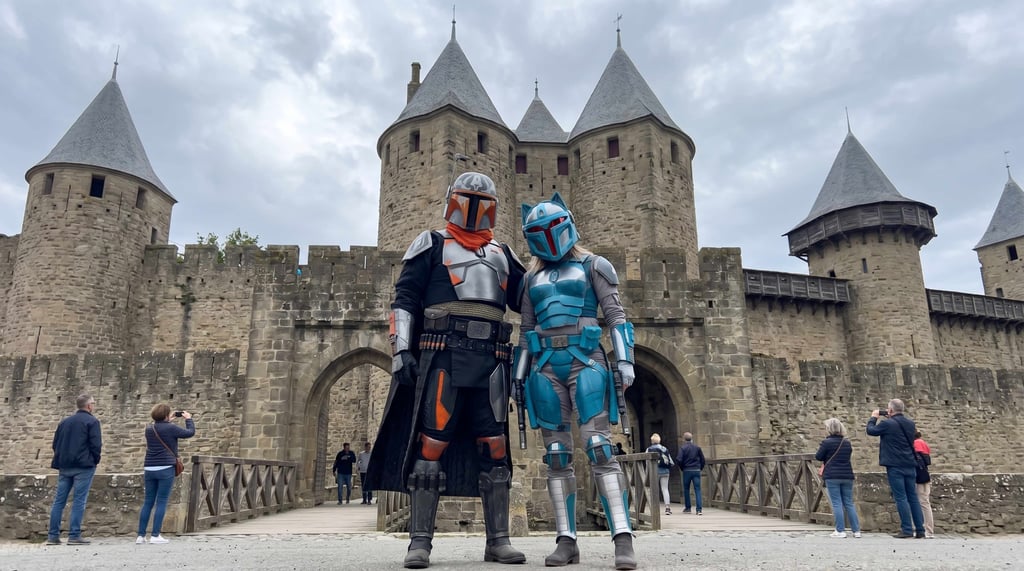
Armor Field Note: Carcassonne, Languedoc, France
I approached the fortress at dawn, twin rings of stone ramparts rising from the hilltop like something built by actual warriors instead of architects. Fifty-two towers punctuated the walls, each one positioned with clear fields of fire across the Languedoc plain. The original drawbridge entrance still functioned, though now it admitted tour groups instead of cavalry.
The ticket booth attendant stared at my beskar plates for a full minute before asking if I was part of some medieval reenactment. I told her no, just sightseeing. She sold me admission anyway, though her hand trembled slightly when she handed me the receipt. Other visitors gave me wide berth as I walked the ramparts, parents pulling children closer when I examined the arrow slits. One security guard followed me for twenty minutes, speaking rapidly into his radio, but never approached directly.
The site opens at 1000 hours from April through September. Arrive before 0900 if you want the walls to yourself. The morning light hits the eastern towers best for reconnaissance photos. Entry costs fifteen credits for the full circuit. The inner bailey houses shops and restaurants now, but the defensive architecture remains sound. These fortifications have held this position for over two millennia. The double walls would still present a serious obstacle to any ground assault. Park in the lower city and take the shuttle up, or prepare for a steep climb on foot.
Standing where Visigoth lords once planned their campaigns, I noted that medieval engineering holds up remarkably well. The guards kept their distance throughout my entire tactical assessment.
© Mando Armory 2026. All rights reserved.